Showing posts with label Afghanistan people. Show all posts

Friday, February 02, 2007

One week in Badghis

This week I’ve had the wonderful pleasure of working with a good friend, the lovely, hardworking and very competent Kate. It has been a busy and often challenging week as I simultaneously:
  • managed the logistics for the workshop Kate has been teaching on criminal justice, with a focus on gender issues;
  • delivered my own 'introduction to human rights' workshop for all the staff of our new Badghis office;
  • monitored and supported the Attorney General’s “Campaign Against Torture” as it was carried out in Badghis; and
  • followed up on a series of individual human rights cases with police, prosecutors and the Chief Judge.
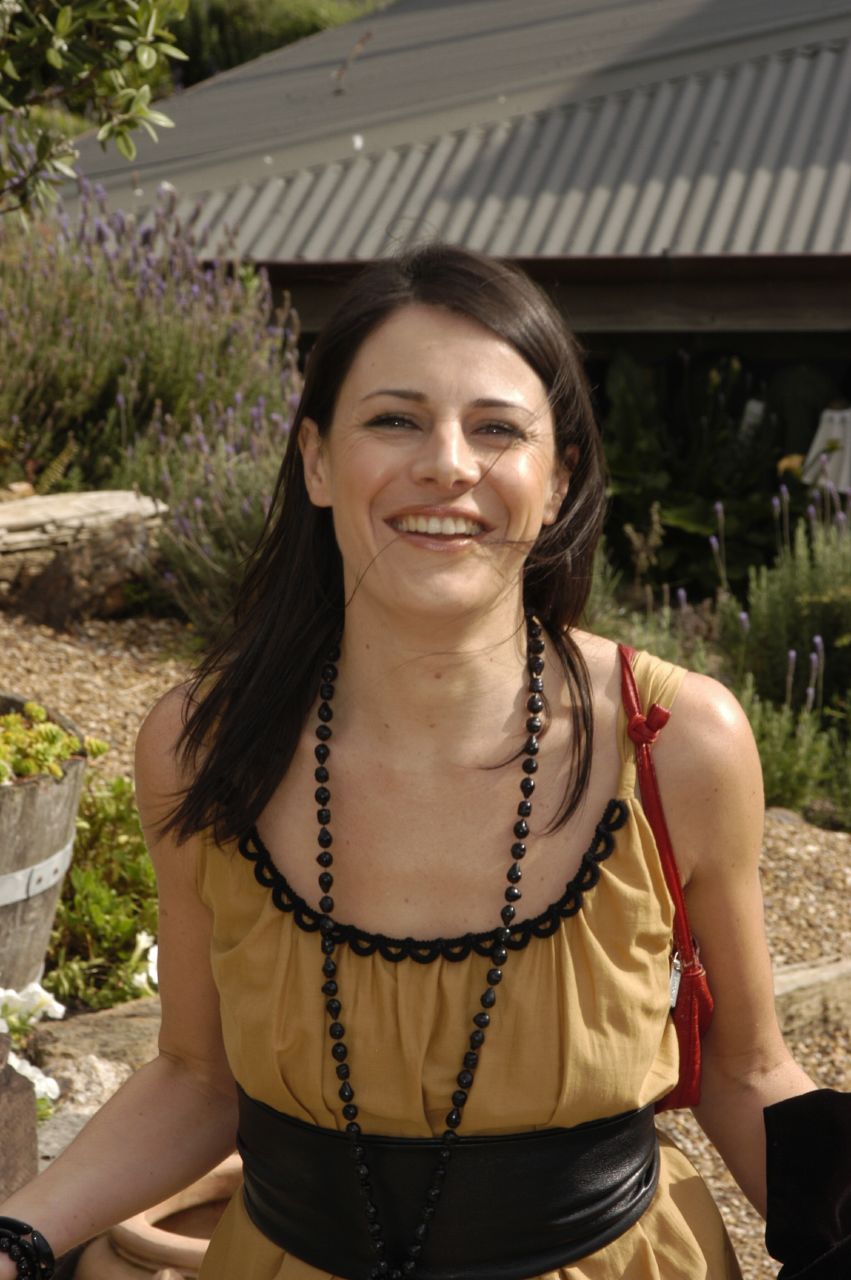
But despite the heavy workload, the physical challenges of a mission to Badghis and the mental and emotional strain, it has been a wonderful week. Firstly, and most importantly, I've been doing all this alongside Kate, whio is delightful company and a caring friend. Secondly, I feel this week as though we are achieving something positive, Thirdly, and possibly as a result of the previous two points, I’ve had a week mostly free from the oppressive presence of the black dog. Warning - this is a long post – it has been a long and very full week! The emotional strain noted above comes from dealing with the individual cases. One related to eight men charged with the murders of five health clinic staff but who have now been detained for months and months beyond the legal time limits. These murders sent deep ripples of fear and sadness through the development community in Afghanistan when they took place last year. The victims were Afghan staff of an NGO running health clinics in an otherwise unserved district of Badghis, they were shot and killed by armed men who burst into the clinic compound and opened fire. Eigth months later, after the charges against these suspects were found to be without substance at the primary court, they are still detained and awaiting the hearing of the appeal by the National Security Directorate. I lobbied the NSD Prosecutor and the Chief Judge and received assurances that a trial date will be set this week. My concern is not only for the rights of the detainees (although this is a serious concern especially given their aquittal at the primary court trial) but also for the families of the victims who badly need some sort of resolution. Another difficult case was that of a young women who died after burning herself in desperation after years of domestic violence. Her parents do not want to press charges against the husband. Fortunately in Afghan law they don’t need to, the police and prosecutors have an obligation to investigate wherever there is an indication that a crime has taken place, but sometimes they need a little bit of encouragement. Kate helped me explain to the prosecutors the legal basis on which they could proceed - with charges of assault being relatively easy to make out, and a possibility even of a more complicated but not impossible charge of murder or incitement to suicide. The workshop Kate was teaching has been my pet project for months now – ever since I made my first mission to Badghis. I found that it was difficult to intervene with police and prosecutors on many cases, especially cases involving women, because they were not necessarily familiar with the relevant provisions of Afghan law, including the Constitution. Several misconceptions were particularly widespread – including the belief that article 130 of the Constitution gives police and prosecutors the right to refer to Hanafi fiqh jurisprudence (interpretations of the Quran by some designated experts) if there is no relevant provision in the law. In fact this article gives such a right only to the courts. Another widely held view, and one which is usually based on the article 130 argument, is that it is a crime for women to run away from home and that they can be arrested, detained and prosecuted as such. There is no such crime in the Penal Code, and the so-called “crime” is derived from a widely held interpretation of Hanafi fiqh – relying on article 130 of the Constitution. Okay, I’m writing my way into a fairly complicated legal discussion here which would require me to discuss the different kinds of crimes in Sharia (Islamic) law, and the particular way in which these three different types of crime (ta’zir, qasas, and hadood) are treated in Afghan law. It is an extremely interesting legal discussion, but probably only to criminal lawyers, Sharia scholars and human rights lawyers. So instead I will summarise by saying that the applicable law in Afghanistan (applying as it does key principles of Sharia law) provides protection for women in many of the types of cases that I often encounter in my monitoring work. Many police and to a lesser but still significant extent, prosecutors are not familiar with Afghan law. If they do know some of the key provisions, they have often never had access to a clear legal analysis of how different sections interact with each other. In my regular monitoring work I often try to raise awareness of these provisions on a case-by-case basis. But obviously a more systematic approach would be better. The Attorney General’s office in Kabul is currently developing a national training and professional development strategy, which will hopefully bring a consistent and national approach to all training for prosecutors. But after a year in Afghanistan, approximately half of which I spent in Kabul and the other half working in some of the countries most remote and neglected provinces (like Badghis and Ghor), I’ve realised that waiting for national or centralised programmes to reach us out here is going to be a very long wait. So I decided to make it my goal to bring the best trainers I could find to Badghis and Ghor. Kate is one of the best, and I'm not only saying that because I am so fond of her, I saying that as a lawyer and someone with experience of training. Not only is she qualified in Sharia law, common law and civil law, she is also intimately familiar with Afghan law and she is a skilled teacher, using participatory methods, like roles plays and case studies, to create a really effective learning experience. My organization doesn’t organise workshops of this kind, so I have no budget for it. Kate’s organization has provided her time and the workshop materials, but everything else – including our accommodation and meals here in Badghis, the tea and sweets, the paper, the pens, and the lovely colour-printed certificates were paid for by Kathryn and I personally. I asked my friends at the Spanish PRT to help out by providing a cooked lunch for the participants each day and they did a great job. The Department of Women’s Affairs gave us a room for two days and then the provincial hospital let us use there large meeting room for the rest of the week. The participants all paid for their own transport to travel from the districts into Qala-e-Naw, the provincial centre. I’m not sure how they were accommodated while in town for the week, I hope that the Office of the Prosecutor and the Provincial Chief of Police helped with that. We didn’t pay per diems which is a common practice here since the official salaries are too low for people to actually survive on them. All in all it was a budget workshop and Kate and I would not have been surprised if turn out had been low as a result. Instead we had the provincial head of the CID, as well as District Chiefs of Police and CID Chiefs from almost all the districts in Badghis. We also had District Prosecutors from all districts and a good delegation from the provincial Office of the Prosecutor. We also had one female Provincial Council member, someone I had met on previous visits because she takes on a role in advocating for women in the legal system here in Badghis, and two senior staff from the Department of Women’s Affairs. Put simply, we had everyone we could have hoped for, all the people who have the power to choose whether or not to arrest and prosecute a man alleged to be beating his wife, or a woman who has been accused of farar az manzel or running away from home. They are also the people who will decide how to deal with a case of rape – which does not exist as a separate crime in the Penal Code, but can be prosecuted under zina (sex outside of marriage) provisions – and who will need to decide whether or not to also prosecute the rape victim for zina (not uncommon). So after months of battling some administrative and substantive barriers within my own organization, and then several false starts when bad weather preventing Kate travelling from Kabul to Herat, she finally arrived last week. We had a lovely Friday together in Herat during which I got to play tour guide and we also enjoyed the relatively balmy weather (it seems the “big cold” is over in Herat, Payman who cooks at our guesthouse tell me so). We visited the famous minarets of Herat and Kate took some lovely photos of the guardian, and of the graves in the shrine next to the minarets. The graves are those of the son of Timur and his wife, a godly woman to whom this shrine is dedicated, and their three children. I also took Kate to my personal favorite, this monument to the ordinary people of Afghanistan who fought against the Soviet occupiers. There are, of course, many different views about the different episodes of Afghanstan's history and I try to avoid giving the impression that I understand any of them well enough to have formed my own. I simply love this monument for it's audacity and it's creativity. Whose idea was it, I wonder, to create a monument out of an actual Soviet tank by simply adding these figures with their pitchforks and their determined faces. On Saturday morning, after a great meeting with the Head of the Afghan Independent Human Rights Commission who was so impressed by Kate that I am hoping I get some credit just for being the one who brought her to town, we set out for Badghis. I have often felt when driving out on road missions that this part of my job feels much more like a mini-vacation. Sure the roads are bone-jangling and there are no public toilets along the 6-7 hour journey (hence the photo of me walking off into the empty distance), but check out this scenery!

We’ve been in Badghis almost a week now and since this post is growing far too long, I’ll just give you a few vignettes. The head of the CID from one remote district bumped into an Afghan colleague of mine after two days in the workshop and told him “I have learned so much. I now know that it is not a crime for a woman to run away from home and I swear to God that I will never again arrest a woman for this reason”. After a guest lecture from our friends in the civilian component of the Spanish PRT (a nurse and a lawyer) on forensic medicine (including the unreliability of virginity tests, for which I give up big respect to my fantastic assistant who had to translate this difficult session) several of the prosecutors asked the nurse if he would come back to give them a more comprehensive workshop on these issues. One night I watched as Kate spent several hours, until 10 o’clock at night, perfecting the design of the completion certificates. She understands that these certificates will be treasured by all participants and will become a feature of their curriculum vitae. She also understood that some colour and good quality card would be considered a sign of the importance of the workshop. Every single moment of the 'introduction to human rights' workshops I ran for our new staff was a gift. They were open to everyone, including the security guards, the drivers, the radio operators, and the cleaners. Along with the pleasure of getting to know them all a bit better I was very grateful for a wonderful illustrated version of the Universal Declaration of Human Rights published by our head office in Kabul.

The images are so well conceived and executed that the participants who couldn't read were still able to follow. In fact, one of the my favorite moments was when I directed everyone to the page which set out the right to have an effective remedy for violations of the rights set out in the Declaration and asked the participants what they thought the State was obliged to do based on this right. One of the female cleaners was the first to respond, describing perfectly what she saw in the picture and in doing so giving an excellent answer. Another highlight was when I gave a scenario in which I was monitoring a human rights violation in Qala-e-Naw and asked the participants to tell me everything I was doing wrong. This story caused much amusement, and even the shyest participant (a lovely, gentle security guard who was also illiterate) found the confidence to make a good point about how such monitoring should be conducted. My amazing Human Rights Assistant, R, and I would finish up the two workshops each afternoon and then go off to do our monitoring work – visiting the prison, interviewing victims, meeting with the prosecutors, the Department of Women’s Affairs and eventually the Chief Judge. After one meeting we were walking back to the compound in the falling dusk and I asked R if he was tired. He smiled and told me that he gets tired when he feels we are not making any difference. But if he sees that things have moved forward even one centimetre for one person then he is not tired. I knew exactly what he meant.

Wednesday, January 17, 2007

These are the people in my neighbourhood

When you live in a place like this there are some very special types of people that you come across. One of the maddest groups of people I've ever met is also one of the groups I respect the most. There is a particular breed of person, almost all men, whose job it is to look for, find and destroy unexploded land mines (both anti-personnel and anti-tank mines) and other unexploded ordinance (UXOs) like rocket propelled grenades. It's "crazy work" as they say, but it is incredibly important work. This country is riddled with land mines and UXOs. In the western region (covering the four provinces of Herat, Badghis, Farah and Ghor) in 2006 there were 25 fatalities caused by land mines or UXOs, and 113 people were injured. Those injuries can be horrific. The anti-personnel mines are cruelly designed to maim and inflict terrible damage to the human body. The anti-tank mines, not surprising, are designed to inflict damage to a tank, so it is not hard to imagine how dangerous they are to humans. Today I heard from an UNMACA official that he was recently talking to a Mujahadeen fighter in Herat province who told him that he had personally laid 1000 anti-personnel mines in Khosan district of Herat. The United Nations Mine Action Coordination Agency and its predecessors have been working to survey and clear mine fields and battle fields since the collapse of the Soviet regime in 1989. This morning I went to briefing on their work in our region. In that time they have cleared 55 million square metres of mine fields and 18 million square metres of battle fields. They have found and destroyed 802 anti-tank mines, 13,553 anti-personnel mines and nearly 1 million UXOs. In the past year they have conducted mine awareness education for 153,000 people from high risk mine areas and have cleared about 3 million square metres each of mine field and battle field. So, yes, they are doing incredibly important work. But can you imagine what this job must be like? Not only is it dangerous (since 1989 there have been 87 accidents while clearing or destroying mines) but it requires what seems to me to be inhuman levels of concentration and fastidiousness. When they survey mine fields they do it inch by painstaking inch. If they get sloppy or bored for an instant it could result in their death, or a terrible injury. I met these guys from time to time, and I have the feeling that a disproportionate number of them come from New Zealand. But wherever they come from they are likely to be hard-cases. One guy, who I think is decidedly cool, goes by the name Ru - he is Maori, from a town not far from my home town. He is not so big by our standards, but here in Afghanistan his size is pretty impressive. He dresses in a black shalwar chamez (the long shirt and pant suit preferred by most men here), and has a 'fauxhawk' (a la David Beckham, but somehow it looks a little different on a big Polynesian guy in Afghanistan) and a decent sized beard. If his appearance isn't enough to make people nervous then his sense of humour probably will. Of course he makes me laugh uncontrollably, but then I'm a Kiwi girl from Tokoroa and that lets me into the small club of people who understand what Ru is talking about most of the time. He's probably a pretty typical deminer - I think he likes to appear rough around the edges and possibly a little bit mad. He is doing "crazy work". He's one of many who are doing what in my opinion is the work of heroes. This is my tribute to them. PS: Last night I got on the treadmill in the bunker for 40 minutes with my iPod on shuffle to provide the stimulation that was lacking in the scenery, went home and cut lovely pictures and words out of my one and only magazine to use in a collage of positivity (I wanted to do something creative and fun and it worked!), then danced around my room to bad pop music. I slept! Very well, even. This morning I woke with a little bit of energy and so I managed a baby yoga session (15 mins) and a bit of sitting still (my name for meditating, I find this label less intimidating). It has helped, as have all your kind, wise and loving comments. One day at a time. PSS: Just to prove that nothing is completely random, here are some of the songs that my iPod shuffle offered me last night while on the treadmill:
  • Keep on Pushing by The Black Seeds;
  • Colour Me Life by Katchafire;
  • You've Got a Friend by Carole King; and
  • I've Got My Love To Keep Me Warm by Bille Holiday.

Tuesday, January 02, 2007

Yearning for justice

This young girl's red hair, bold eyebrows and serious look captivated me.
She is the Deputy President of the Provincial Council, and you just watched as she argued passionately with the President of the Council about the need for human rights and justice in Afghanistan. He had suggested that it was time for people in Afghanistan to accept that there had been no human rights in this country for 30 years, that those who had been responsible for abuses of human rights were still around and are not going to go away. He argued that it was time to simply accept this and let it be. He asked: what would make things better anyway? Did she want to see all those responsible for human rights violations executed? Would that make things better? She argued that it was never too late for justice, that she didn’t want to see those responsible killed, instead she wanted them publicly identified, investigated and tried. She wanted a chance for the victims and their families to have their stories told, to have their pain heard and acknowledged. She wanted people to know that those who were responsible for their suffering were not allowed to get away with it without any accountability or punishment. She talked about war crimes tribunals in other countries, about war criminals who had been held accountable for their crimes in other jurisdictions. She talked about global efforts to have Pinochet tried and about the trial of Milosovic. She is obviously intelligent, well informed and committed to justice. She is, quite simply, a woman who you admire, who you would like to get to know better and to work with. She is the kind of woman who can give you hope for this country and a sense of purpose and optimism in your work. So it is incredibly hard when you have to be so careful about what you say in response to her, when you have to carefully select each word to ensure that you are speaking in accordance with your organisation’s official position on the matter. She is referring to the Human Rights Watch report on human rights abuses committed by the Jehadi leaders and factions in Kabul in the 1990’s. She is furious that President Karzai has rejected the report and refused to act on its recommendations to bring those leaders (now holding powerful positions in Karzai’s cabinet and in the Parliament) to trial. You first have to clarify one point - she has mistakenly attributed the HRW report to the Afghan Independent Human Rights Commission. This confusion is proving to be common across the country and is risky for the Commission, so you are careful to point out that the report she is referring to was not produced by the Commission, but rather by an independent NGO called ‘Human Rights Watch’. You explain that AIHRC was involved in the background research for the Action Plan on Peace, Reconciliation and Justice and they did produce a report based on their consultations with thousands of Afghans, that report was “A Call for Justice”. It has been used as the basis for the development of the Action Plan. You remind her that on 10 December 2006, International Human Rights Day, President Karzai launched the Action Plan. You say that this is a very important development, one that the AIHRC and the international community have been pushing for over the past year. You remind her that the plan is comprehensive (i.e. that it does not only deal with accountability but also with victims needs to tell their stories and to see their experiences reflected in shared histories of Afghanistan) and that it is progressive (i.e. it starts with steps like establishing national memorial days and have a series of phases that should happen consequentially). You feel acutely aware that in the face of genuine passionate feeling you are responding with policy. It is good, sound policy and you have no argument with your superiors in Kabul who have developed the policy. But you feel that this woman deserves more from you. You know that the launch of the plan was completely overshadowed by the reaction to the Human Rights Watch press release calling for the prosecution of a number of key figures involved in human rights abuses in the 1990s. Those named in the HRW report and press release have decided to use this as an opportunity to attack the international community and the AIHRC and to put the President in an extremely difficult situation. You are afraid that if this situation escalates it will endanger the implementation of the Action Plan itself, so you feel that the policy you have been given is correct. But in your heart you want to join with her in her passion. Instead you talk calmly and carefully about the Action Plan and ask for ideas about what you and she can do together in the province to promote greater awareness of the plan. You argue that it is the right of people here in Farah to know about the plan and to understand what the plan proposes should happen in Afghanistan. You look her in the eye and tell her that your mandate is to promote implementation of the Action Plan, so although you understand she may be disappointed in some aspects of the plan this is what you have to offer. You look her in the eye and tell her that you do not work in Kabul, that you work in Farah, so although you do not disagree with her suggestions that more needs to be done at the national level to ensure implementation of the plan you are here, not there, and you can only offer to work with her on initiatives to promote the Action Plan here. You watch her face while your interpreter translates your words to her. You see that although she is passionate and ready to fight about these issues, she is not going to fight you. She is going to be gracious to you, she is going to accept your mandate, and accept what you can do rather than railing against what you cannot do. You hear her say that she will prepare a proposal for some dissemination activities in Farah, using radio, televisions and mobile awareness raising workshops for the remote areas. You let out the breath that you have been holding. You take in another deep breath and feel yourself begin to believe that you can find a small way to make your contribution in this place. Background information: Transitional justice is the term used to describe the full range of processes and mechanisms associated with a society's attempts to address past abuses, ensure accountability, serve justice and achieve reconciliation after a period of war, conflict and/or oppression. These may include a combination of both judicial and non-judicial mechanisms, individual prosecutions, reparations, truth-seeking, institutional reform, vetting and dismissals. In 2002 the Afghanistan Independent Human Rights Commission was given a mandate, through a decree signed by the Chairman to “undertake national consultations and propose a national strategy for transitional justice and for addressing the abuses of the past.” Throughout 2003 and 2004 AIHRC undertook a widespread consultation, comprised of :
  1. the application of a survey, designed to capture quantitative data and test for preferences to 4151 respondents; and
  2. the convening of over 200 focus group discussions with over 2000 participants, designed to capture qualitative data and test for perceptions.

The consultation took eight months and covered 32 of Afghanistan’s 34 provinces as well as refugee populations in Iran and Pakistan. I highly recommend the resulting report “A Call for Justice” to anyone with an interest in transitional justice in Afghanistan. But I do warn you that it is disturbing to read. A pdf file of the report can be accessed here Based on the findings reported in “A Call for Justice”, the Government of Afghanistan, in cooperation with the AIHRC and UNAMA (the United Nations Assistance Mission in Afghanistan), developed the Action Plan for Peace, Reconciliation and Justice. It was presented and agreed upon at the Hague Conference on Peace, Reconciliation and Justice in Afghanistan on 6-7 June 2005. Although the Government of Afghanistan adopted the plan in early 2006 the President did not formally launch it until 10 December 2006. Where do I fit into this? Part of my job description is to promote and support the implementation of this Action Plan – by raising awareness of the plan amongst the general public, the media, and local authorities. Some of the Afghan people with whom I discuss this plan want more than the plan offers – more immediate judicial action to bring violators to account, for example, where the action plan proposes more progressive actions starting with memorials and the development of shared historical narratives.

I feel deep sympathy for those victims of gross human rights violations who want immediate justice – but I also trust the wisdom of those people who have developed this plan, taking into account the current political and security environment in Afghanistan. Essentially, although my heart longs to meet these cries for justice with the response that they yearn for, my head tells me that people who know so much more than me have so carefully mapped out this path, and that we need to follow it step by step.

An Afghan follows his heart

This story touched me “An Afghan follows his heart” He is the same age as me, leaving a presumably comfortable and apparently successful life in Washington in order to make his contribution here in his homeland, Afghanistan. But unlike me this guy is really brave, he is going to take up a senior government position in Kandahar province. In Kandahar government officials are targeted and not infrequently killed by the anti-government elements. I wish him safety and the chance to help his people.

Saturday, December 30, 2006

Eid mubarak!

Today is the first day of Eid Al'Adha. It is a time when all those who can afford it will purchase and slaughter a goat, sheep or cow and share the meat with the poor. Of course, the Eid also brings gifts and new clothes for the children and delicious meals and celebrations with loved ones. But the holiday has also retained this essential element, that it is a time to share what you have with those who don't have enough. It's an inspiring example of generosity in a setting that could lead the best of us to think only of caring for ourselves and our own. It helps me deal with some of the more unpleasant aspects of life that I've been working with this week (like the ex-Taleb member of a Provincial Council who wanted an arrested kidnapper to be handed over to the community for lynching rather than being dealt with by the justice system). I took this photo during Eid Al'Adha last year, I liked to think of these guys as the ones that got away. It is quite amazing to realise that I've been here a year, my Dari certainly doesn't show much progress. Today I had lunch with the family of one of our drivers, and I struggled to converse even with his adorable four year old daughter. But I did manage to convince her to come visit me in New Zealand, I think she thought it was somewhere near Kabul!

Thursday, December 21, 2006

Maybe we can make a difference

This week, on Monday, UNAMA released a report on the civilian causalities from a recent incident in which British soldiers fired shots after an attack on their convoy. These situations are complex, and the application of international humanitarian law is not always straightforward, but Afghan citizens have been saying recently that they find it a bit rich for Western nations to issue reports on human rights violations in Afghanistan when there are no reports being issued on the civilian casualties caused by the ISAF/NATO forces. So this report is important. It has been welcomed by residents in Kandahar. Credible, impartial monitoring of the impact on civilians of armed conflict in Afghanistan is essential to the success of our shared goal: stabilization and future development of the country. Afghan NGOs and the Afghan Independent Human Rights Commission have reported on these types of incidents in the past and the UN has released statements expressing concern at reports of large civilian casualties but this is the first official UN report on civilian causalities based on investigation of a specific incident It includes findings and recommendations and it is intended to the first of many. Friends of mine, both Afghan and international, worked hard on this report and I’m proud of their work. This report reminds me what good human rights monitoring can do, and it inspires me to do my little part as well as I can. I’ve been discouraged in my work this week, so this was just the motivator I needed.

Wednesday, December 13, 2006

Photos - instalment one

As promised I have lots of photos, and since I've managed to get through four months of this blog without any apparent security problems I've decided to start posting photos of myself. Anyway, I'm going to start from the very beginning, the last major social event in Afghanistan before I left for NZ was a farewell party for the lovely Kai. Kai works with Beth, who Amanda and Immy met in Liberia, so the first photo is of Beth and I enjoying the spectacle of Kai and Matt dancing. The next photo is of Kai dancing with a selection of lovely ladies including myself, Beth and to the right of Kai is Paula, who works with Beth and Kai. My favorite little dog in Kabul (I have to add the qualifier "little" here because I don't want my two favorite big dogs in Kabul to be offended) is Tootsie, who lives with Kai and his fantastic housemates. So here is a shot of Tootsie and I hanging out on the stairs. Tootsie can do tricks, which just goes to show how little there is to do to entertain oneself around here, Kai spent his free time teaching Tootsie to jump through a hoop. Then it was time to head for NZ, with a quick stop in Dubai for a lovely dinner at a Japanese restaurant with Lawrence, an old family friend who recently moved to Dubai, along with Kai (also on his way out, but in his case for good), and a few colleagues from my human rights team in Afghanistan, including the very funny Scott from up north in Mazar-e-Sharif and the very lovely Rupert who got stuck with Kandahar as a duty station.

Then I got to New Zealand, heading straight over to Waiheke, and on the first evening Theresa and Tom were having a "Love Boat" cruise around the island. I loved their outfits! The other shots from the Love Boat are of Wayne and Rhys. The weather was perfect and the Love Boat cruise merged seamlessly into a big BBQ for close friends and family at the house my parents had rented. I was more than a little bit jet-lagged, but the excitment of having so many of my family members in once place at one time was enough to keep me up for much longer than would ever be possible otherwise.

Some of favorite shots from the BBQ are of a group of my male cousins around the BBQ, a shot of me with my Grandmother, a lovely photo of my sister with her bridesmaid, our cousin Christina and Christina's mother, our beautiful aunt Delwynne. Here they are...

Okay, the other photos don't seem to want to appear today. I'll leave it here and post more in the weekend.

Monday, December 11, 2006

Torture and other interesting topics for conversation

Today I had a long conversation with the District Chief of Police and the Head of the Criminal Investigation Department in Qades District, Badghis. Their frankness was at once refreshing, disarming and a little disturbing. I introduced myself as the Human Rights Officer for the province, and explained that I was in town to do research and monitoring of the legality of detention in their police lock up and the district prison. They kicked off the discussion by telling me that although they know the rules and regulations regarding human rights, they are not able to follow them because the only way they can get the criminals in their district to confess is to beat and torture them. In the end we agreed to disagree on this point, but we were certainly all in agreement that it was good for them to be honest with me so that my report could be accurate and, hopefully, encourage the donors who will be reading it to continue to support the professionalisation of the Afghan National Police. After interveiwing all the detainees in the police cells and the district jail (which turned out to be the same place) I met the District Prosecutor to verify a number of apparent irregularities in the detainees cases. It was an interesting discussion. Where one detainee had told me that he had been in the prison for seven months and had not appeared before a court or been convicted, the prosecutor insisted that this prisoner had been arrested only a month prior and had been tried, convicted and sentenced to seven months imprisonment. Perhaps the prisoner misunderstood my question and told me his sentence when I asked how long he had been in the prison. With the various language and communication barriers it sometimes feels impossible to be absolutely certain of meaning. The prosecutor and I also had a disagreement as to whether it was a crime under Afghan law for a woman to run away from her home. A young woman had recently been detained for a week while under investigation for this alleged crime, in the end the prosecutor decided she had been kidnapped, but he was insistent that he had been legally entitled to arrest and detain her while she as investigated for the alleged crime. In the end I dropped the debate, I will leave that one to my friend Kathryn who I´ve got coming up to this remote province from Kabul in January or February. Kathryn trains the prosecutors in Kabul on gender and criminal justice, so she´s much better placed than I am to have a debate about the provisions of Afghan law in this regard. The woman had been released in any case, so I felt less compelled to get a resolution on the point today. It makes for a long day, after the bone-rattling drive for several hours we were sitting in cold corners of the prison yard for hours so that our interviews with the detainees and prisoners could be relatively private. Of course they are stuck there all the time, so it seems horrible to complain about just a few hours. But I will have to get out the yoga mat again tonight and stretch out my stiff limbs. I´ve been managing a good 40 minutes every morning since I got up here and I think it helps with the physical and mental impact of this kind of work. This morning I tried out my new meditation guide on the iPod, but I only lasted 15 out of the 38 minutes before I gave in to the voices and distractions. I´ll have to build up to that one. Once again I have photos, which will be posted as soon as I get back to Herat. Tonight I´m meeting the American police mentor team, who are working with the Afghan National Police in the province. I´m keen to talk about what I was told today and to find out whether they have any plans for training on investigation techniques, anything other than laying the suspect out on the ground and beating him with large wooden sticks would be an improvement so I´m guessing even the Americans will be able to help with this. Tomorrow morning I have a meeting with the Provincial Chief Prosecutor, this will be my first meeting with him because he is new and has replaced the chap I met last time I was up here. I may have to win him over to the plan for the gender and criminal justice workshop, so I´m hoping to make a good first connection. Then it´s on the road and back to Herat, where my own bed and bathroom are waiting for me. I just found out tonight that my colleague is being sent to New York for two months so I have to somehow fit all of her urgent work into my workplan for the coming few months. It was always going to be a busy little time, but now it is threatening to be ridiculous. I´ll have to pull out my best prioritisation and planning skills to get through this lot in one piece. But first there is the most important task of getting a Christmas tree this weekend! Update: After my slightly snide comment about the American police trainers, they just bought me pizza and a coke, which was very kind. Of course I would have preferred a glass of red wine, which was available at the Spanish PRT bar, but since the American military are prohibited from drinking alcohol while in an active theatre of war, i.e. Afghanistan, it seemed impolite to ask for a wine in place of the coke that they were all drinking. But now I´m off to have my second dinner with the Spanish guys, at least to have a glass of wine!

Thursday, November 02, 2006

Karzai online

President Karzai today launched his own website, I'll add it as a link in my list but thought it was a sufficiently momentous occasion to warrant a special post as well. Enjoy!