Showing posts with label Afghanistan children. Show all posts

Friday, March 02, 2007

Patience is rewarded

Annie has been waiting patiently for news about the boxes she has sent to us of woollens for the children in the orphanage in Ghor. Today I got news from Ghor that five of the boxes have arrived, filled with hats and socks and gloves and scarves. We've just had a very cold snap, bringing lot of snow to Ghor (some of my colleagues have been stuck up there for almost a week). So these woollies have arrived in time to make a real difference. If you made a contribution to Annie's boxes then know that they are now in situ and will be ably distributed (no doubt more efficiently than I managed) by Magnea and Julija (of Iceland and Lithuania respectively). For those of you who made financial contributions, I am planning to use that money for school supplies. I think that Annie pulled together nine boxes of woollens, so that ground should be well covered. The Director of the orphanage specifically asked me for notebooks and pencils/pens etc. I feel pretty sure that you would all be happy with that, no? Also on the theme of patience rewarded, I have been patiently popping into Jolissa's blog (Busytown) over recent months waiting for her to decide it is time to return to the screen. This week I found her there in vintage Jolissa form. If you haven't read Busytown before then I recommend a visit. Jolissa is the older sister of a dear friend, and when I met her in person during a visit to New York four years ago (to celebrate my 30th birthday) I discovered a woman of intelligence, warmth, and wit. Her blog covers the many facets of the life of a writer and scholar with two small children, living far from her home country and family. All that with a sense of humour, curiosity and fun. Oh yes, my patience has been rewarded. I've been indulging in lots of blog exploration this morning, it is a little bit like my equivalent of strolling through town, stopping into inspiring independent art galleries and bookstores. Also this morning I started playing with my new pencils, in my new journal. I have never in my life tried drawing, but with the Commander's encouragement and the help of a book from his mother, I'm having a go. So far, so much fun!

Saturday, January 13, 2007

Generosity

Ghor Mission Jan 2007 - Girls at orphange Originally uploaded by frida world.

You are fabulous! Enough of you have told me that you want help these children that I am going to find a way to make it happen. There are two possibilities, one is for me to set up a way to accept donations. I think I can do that through PayPal, hopefully that will be easy for me to track and keep it all transparent. I will find out how to do that today.

Update: I think I figured it out - the button is up and the link seems to work. I've never received payments through PayPal before, but I assume they will be tracked in my account and it should be clear that they were made for the fund for orphans. The other possibility is to send things here. Annieelf has started organising that - so my job is to figure out a secure way to get things here. It could be tricky but I'll give it my best shot. The main thing that would be worth sending is good quality woollens. Everything else is probably easier to buy here. I won't be going back up to Cheghcharan until early March, but I am going to Badghis at the end of this month and the situation there is pretty similar to Ghor (not quite so dire but still many, many people without enough money to provide the basics for their children). Okay - now you've given me my weekend work I had better get on with it! Thanks for your generosity. PS: If you donate money I will spend it on school supplies for the orphanage as well as warm boots and clothes. That's what the children wanted and what the Director of the orphanage also suggested - a black board, some chalk, notebooks, pens and pencils. I'd like to get some crayons as well for art work.

Friday, January 12, 2007

Gratitude

Space! I barely even realised how much I had been craving it until I got some and felt such an incredible rush of happiness. From the moment the plane took off I felt as though I had been set free from a kind of prison. Space! As we flew over the plains of Herat and then up over the mountains of Ghor, I had this huge, silly grin on my face and my spirit felt lighter than it has in weeks. This week I was grateful for space and the freedom to move through it. Cheghcharan, the provincial capital of Ghor is a small, poor town. I spent some time this week in the bazaar, trying to buy decent clothes and shoes for the orphanage, because I hadn't brought enough with me from Herat for the number of kids that I found when I got there. Here are some images from the market. This week I was grateful for my income and what it enables me to do. Most of these children are not orphans, although many would come from women-headed households. Some even have fathers, but their families are too poor to care for them. On my first visit the Director explained all this to me, and shocked me with his announcement that they had between 250 and 300 children in the orphanage (I suspect some of the children come and go from their family homes, hence the approximate number). I realised that I couldn't possibly give enough for all the children on this visit, so I suggested that most of the clothes and shoes I had brought would fit the youngest children. Next time I visit I'll take something for the older children, probably books and pens, I think. So we agreed that the Director would sort the clothes into approximate sizes and I would return on Thursday morning so we could distribute them together to the smallest children. When I arrived on Thursday it was snowing. The Director brought me into the yard of the orphanage and as I stood there, not quite sure what was going on, all the children filed out of the buildings and stood around the yard, in the snow, looking expectantly at me. I desparately tried to tell the Director that I didn't have enough clothes for all the children, and that in any case they shouldn't be standing out in the snow. Just as I was beginning to feel completely overwhelmed by the terrible situation I had created in my clumsiness a car pulled up and my fabulous colleague/assistant got out, he had finished his meeting with the Governor and decided to come and see how I was doing. As he stepped out of the car I burst into tears, explaining that I had got myself into this horrible situation and begging his help to fix it! He was great, we explained to the Director that it was too cold for the children to wait outside and he explained to the children that this time we only had clothes for the littlest children. He helped me organise for all the children to go inside and then come out in small groups so that we could fit the clothes and shoes properly. My other colleagues arrived - Muna and Harry - and they were fantastic. I watched Muna gently trying to fit the tiny, cold feet and arms into our second-hand boots and jackets. Meanwhile Harry was slipping polar fleece hats onto cold little heads and checking which children didn't have socks so that we could make sure they got the best we had. This week I was grateful for my colleagues, good hearted and hard working people on whom I can rely and with whom I can have fun. This little girl was being helped by an older boy. From what I could make out he was not her brother, but he was beautifully gentle with her and a very good advocate for her, making sure she got everything he could find that would fit her. The little boy on the left has his new hat, boots, jacket and fleecy shirt and pants on as well. In the end, things became a little chaotic again, as the older children all made their way out into the yard and wanted to get somethings for themselves. I had bought six footballs and so we told the teachers to let the children play with them, we also found a box of clothes donated by someone from the Lithuanian PRT which had not been distributed so we were able to give some of the older children clothes, hats, gloves and shoes from that box. This week I was grateful for the chance to give and most of all for the fabulous Commander, whose idea this was in the first place and whose generosity and kind-heartedness help me keep my faith in the good. Another highlight of this mission was my visit to a community-based girls' school in Dowlatyar. The girls were studying mathematics, chemistry and physics when I arrived. When I asked them how many wanted to be doctors, teachers, lawyers and engineers respectively, most of them said they wanted to be doctors. Which means they are aiming to get the highest grades possible in their exams. I told them about Maria Bashir, the women who was recently appointed to be the Provincial Chief Prosecutor in Herat and said I wondered whether the next Director of Public Health for Ghor province was in the room. Perhaps this beautiful girl? This week I was grateful for my education and everything it has brought me, including the chance to work here. And finally, just to prove I was there, here is a photo of me with my fabulous colleague Reza (on the right) without whom I wouldn't be able to do anything useful at all, and our counterpart from the Afghan Independent Human Rights Commission, Mr Hakak. This week, as always, I was grateful for Reza! We stopped for a photo op on our way to Dowlatyar, and I felt free as a bird after these weeks of restricted movement in Herat. I also got to walk from one village to the next through the snow in Dowlatyar - much to the astonishment of the locals who seemed to expect a foreigner like myself to collapse in a heap of helplessness as soon as I stepped away from the 4x4! This week I was grateful that I can walk with ease. One final set of photos - the rest are on flickr if you want to see more. These men bring the wood in from the country-side to Cheghcharan town every morning to sell it for fuel. Their donkeys are piled high with dried scrub and wood. I worry about the environmental impact of this practice, but have no better option to offer them right now so I am grateful for the warmth given off by the wood stoves that I found in every office I visited, and (thank goodness) in every prison cell as well. This week I was grateful for bukhari (stoves) There are some strange loud noises going on this morning, it sounds like explosions somewhere in the city. More often than not these are controlled explosions, getting rid of unexploded ordinanaces found by the demining teams, but it reminds me that I'm back in Herat and won't be able to go out walking as I please until I go home to New Zealand in February or when I return to Ghor, whichever comes first. This week I am grateful for being able to travel.

Thursday, January 11, 2007

Why I love going to Ghor

Ghor Mission Jan 2007 - little girl after 01 Originally uploaded by frida world.

Okay, so my nails are all broken, my lips are chapped and my feet are blistered but I am happy. I love getting out of the office. I love working in Ghor. I love flying in the little plane, I love the sense of space that I get from leaving the city and heading up into the mountains. I love walking from one village to the next through the snow. I love visiting girls' schools in the middle of nowhere and finding them in the middle of chemistry and physics lessons. I also love getting back to Herat to my lovely man, home cooked dinner, a long hot shower, a bottle of red wine and Scrubs on DVD. Thanks for all your comments, I promise photos and details tomorrow (if the internet is working). PS: Yes, this is one of the little girls at the orphanage, with her new jacket, hat and tights. More about that soon - but I won't deny I was in tears at one point - instead of the 30 children I was expecting I found almost 300!

Sunday, December 17, 2006

Afghan women saving mothers' lives

Last night I was having an after dinner drink with some colleagues and visitors from Kabul and we got onto the topic of midwife projects here in Afghanistan. I raised the subject because of a very cool Icelandic woman who is based up in Chegcharan in Ghor who is a development advisor to the PRT and who has been putting lots of energy into getting midwife training happening up there. This story was in the news yesterday. I found it both disturbing and somewhat encouraging. Nothing really seems very encouraging in this country, but here is a little step that might make a big difference to some women and babies. Afghan women saving mothers' lives Dec 17 - (AFP) In a white coat and with a dark scarf covering her hair, newly graduated midwife Fatema, 20, is just months on the job and still a little nervous. But the determined young woman has no doubts about the importance of her work in a small clinic in rural northern Afghanistan, a country with one of the world's highest maternal mortality rates. Fatema's elder sister bled to death in childbirth when she was 16, having been married at 15. Her baby's shoulder became stuck in her small pelvis and two traditional birth attendants broke its neck trying to pull it out. It was a complicated breech delivery, with the child positioned bottom first, and the untrained birth attendants -- who help 80 percent of Afghan women have their babies -- did not know how else to handle the problem. "Look, if someone had known something at that time, we could have referred them to go to hospital," says Fatema, which is not her real name because like many Afghan women interviewed for this story she did not want her name to be used. Lack of knowledge and superstition amongst the rural community in Takhar province spawned rumours afterwards that the dead teenager must have been "bad" to deserve such a fate. When the British medical charity Merlin came to Takhar in 2004 to look for women to train as midwives, Fatema jumped at the chance. In February she and 20 other women became the first graduates from a USAID-funded 18-month course at the Community Midwife Education centre in the provincial capital Taloqan, returning to their districts with internationally recognised diplomas to improve the chances of women surviving birth. War-shattered Afghanistan is behind only Sierra Leone for the highest number of women to die in childbirth. The maternal mortality rate here is around 1,600 out of 100,000 live births, according to a recent UNICEF survey. This means that one in six women between the ages of 15 and 49 die giving birth. This compares with a rate of about 13 out of 100,000 in Britain, where one in 3,800 women die in childbirth, according to 2000 UN statistics. There are many grim stories to illustrate the problem in Afghanistan: of traditional birth attendants, called dayee, cutting a baby's limbs off with a kitchen knife in a desperate attempt to save a woman's life when something went wrong in delivery; of pregnant women bleeding to death on a days-long donkey ride to find help at a far-away health facility; of husbands beating their pregnant wives' bellies because they can't afford another child. "It is the worst I have ever seen," says Addie Koster, who heads the Taloqan centre and has worked in Afghanistan for the past five years after stints in Africa, Asia and Central America. There are many reasons so many women die, says Koster, most linking back to the 25 years of war that destroyed the country's infrastructure and entrenched a social system that denied women basic rights. Often mothers' pelvises are too small for birth, she says. This can be because they are young -- with nearly two-thirds of girls married before age 16, according to statistics cited by the United Nations -- or malnourished as about two-thirds of pregnant Afghan women are. When complications arise, the difficult terrain and lack of infrastructure can mean clinics are days away although some women are too poor to even afford the donkey ride. Dayees sometimes rely on folklorish techniques -- such has biting on hair to dislodge the placenta -- that may appear to work in simple births but are of little use when things go wrong. More dangerously, they make liberal use of oxytocin -- an injectable hormone that can be bought in the smallest bazaar without a prescription -- to induce labour even when the baby just cannot fit through the pelvis. In a custom entrenched during the 1996-2001 rule of the ultra-conservative Taliban who forced women under the all-covering burqa that most still wear, some men still refuse to allow their wives to go to clinics where only a male nurse or doctor is present. Taloqan's Community Midwife Education centre is a key part of a strategy taking on all these problems. One of its main aims is to boost the number of women in the province giving birth with the help of a skilled attendant from the current eight percent. Province-wide clinics are being built -- although in one case staff operated out of tents for two months before being able to move into a newly constructed building. Female staff are being trained and recruited from other provinces, even other countries; community meetings are explaining the benefits of pre- and ante-natal check-up, having a baby with a trained midwife, and breast feeding. Another of the centre's fresh graduates, 22-year-old Lailuma, is installed in a clinic far from the provincial capital. Since arriving in April, she has helped with 15 deliveries -- up from zero before she arrived because women would not see the then male-only staff. "The area where I live is very remote. There were no midwives," the stylish woman says softly, a black scarf framing her face. "I wanted to become a midwife because I wanted to do something for women." Twenty-two new students have been in place since April, learning to suture on chunks of raw meat and delivering the same dummy baby over and over again before getting down to the real thing. They are not shy about describing the difficulties facing Afghan women. "There are no cars, no road, no transport. And security is not good," says one explaining why most rural women give birth at home. "The dayees know nothing. After 20 years of war, no one knows anything. We have been left behind because of the war," says another. "During the Taliban it was worse," adds one more, recalling the government that refused to let women work which meant there were few female doctors for them to see. The situation is improving in provinces like Takhar which see little of the current Taliban insurgency, which is focussed on the south and east of the country. When the hardline regime fell, Takhar had only five female medical staff, says provincial health chief Hakim Aziz. Today the number is well on the way to the goal of putting at least two women into each of its 52 clinics. And whereas a community health clinic once saw on average five deliveries a month, there are now about 25, Aziz says. The new students at Merlin's centre were selected by their communities for the program and are obliged to return after graduation to work for at least five years. They will go a long way towards filling the 32 vacancies for midwives in Takhar, says Nezamuddin Jalil from the Social and Health Development Program. The group runs nine of the province's clinics including Fatema's at Bangi, a community of about 30,000 people 30 kilometres (19 miles) from Taloqan and dotted with green flags marking some of the fiercest battles of the US-led offensive that dislodged the backward-looking Taliban. "We started from zero," the doctor says. "There was no staff, no access. Now we have enough health facilities and enough equipment. But there is a lack of female staff." Despite the challenges, "day by day it will be ok," he says.

Friday, December 15, 2006

A Christmas gift idea - help Afghan children

Last night the Commander suggested that for Christmas we go out and buy as many warm children's clothes as we can find and give them to the children and the orphanage in Ghor or somewhere equally remote and neglected.
He is going to tell his family and friends that they can deposit money into his bank account for instead of giving him Christmas gifts and we'll get more clothes for the children with the money.
If anyone reading this blog is interested in doing the same thing post me a comment (if I don't already have it then you'll need to give me your email address) and I'll tell you how you can do the same thing.
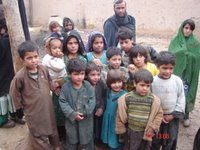
For inspiration I've posted some photos of the kids in Qala-e-Naw at my human rights event last weekend, they all seemed to be under-dressed to me and it was really cold.

Thursday, November 16, 2006

Impact of conflict on women and children - Part II

Yesterday I went on mission again, this time to the isolated province of Ghor. I had a series of meetings with provincial government officials, including the Governor and the Chief Prosecutor, and with the Commander of the Provincial Reconstruction team (the military team responsible for security and reconstruction, in this case led by the Lithuaniuns with contingents from Iceland, Denmark and Croatia). The flight to Chegcharan, the provincial capital, is amazingly scenic with seemingly endless stretches of desertous and mountainous terrain revealing how beautiful and varied a limited palette of brown can be. Now that the mountians are covered in snow it is even more striking. But all that stark beauty is the result of drought and under-development so when you land the picture shifts from impressive beauty to heart-breaking poverty and deprivation. Those stunning white peaks, in reality, mean the beginning of the harsh winter which will cut off some of the more remote districts from the provincial centre. If winterization and drought relief assistance hasn't already reached people in those districts it could be prevented from getting there by the next snow fall. But on this trip my focus was not on economic and social rights, I was following up on a "jihad against corruption" which has been launched by the Attorney General of Afghanistan. The provincial prosecutor has been directed to begin investigations into a variety of allegations against local officials and local illegal armed commanders. He asked for my help, and this is the second time I've visited him to try and advise him on how to go about this process without putting himself or his staff into unecessary danger. This time he was particularly disconsolate and I think I will need to go more often and stay longer if I am going to be of real help to him. Thank goodness for the friendly Lithuanians, I'll plan a longer stay in January and look forward to more "opps tra la la". But the strongest impression left with me from this visit was of a man who came to me at the end of my time at the Prosecutor's office appealing for my help to recover his daughter who was allegedly kidnapped by a local commander several years ago when she was 5 years old. Again, I was struck by the degree to which women and children in Afghanistan are suffering as a result of conflicts which are led by men. Girl children suffer perhaps the most of all. This man stood in front of me in tears, having thrown off his turban to show me his shaven head in a gesture of deep despair. I asked the Chief Prosecutor what he had done to investigate the case, he told me that he had written to the Commander concerned but, not surprisingly, had recieved no repsonse. He told me that the police could not do anything etiher. I took the documents about the case from the distraught father and left with a heavy heart. I have no idea where this girl is now, nor what condition she is in. I will make every effort I can to locate her and use what little influence I have to return her to her family, but it is not a case that I can feel very optimistic about. In a meeting recently to discuss reconciliation efforts between two tribes in conflict I raised the issues of the need to involve women and children in reconciliation processes. As it goes here traditionally, the reconciliation processes involve only men, and only relatively powerful and influential men at that. The women and children, who obviously experience violent conflict in very different ways to the men, are never heard. Their voices and their experiences are absent from the 'mediation table'. I'm convinced that as long as those voices and those perspectives are not included in the peace building process, the process will not be successful. But when I raised this issue, I was told that the possibility simply does not exist. I won't give up, at the very least there are possibilities to involve women and children in the next stage of peace building, which will be the reconstruction and development projects that will hopefully be introduced into these divided communities. But I feel as though this point is so obvious that I can't believe others really expect a "peace process" dominated by men to work. Those men are weighing up different options, considering acceptable and unacceptable trade-offs. Surely it doesn't take an expert in conflict resolution to work out that what may be an acceptable trade-off to them might not be to the women and children who suffer as a direct result.

Tuesday, November 14, 2006

Impact of conflict on women and children - Part I

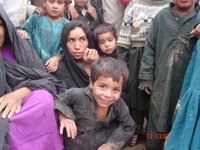
So this week I've had no time to feel sorry for myself, being this busy actually working on human rights issues is a great antidote for the blues. In case I needed any more inspiration, check out this little guy who managed to find a grin for me despite the pretty horrrific experiences he has recently been through and the really depressing conditions he is now living in.

Yesterday I made a mission to assess the human rights impact of recent conflict in an area which I won't name - just to be certain that the stories I tell here and the pictures I share don't put the people involved in any danger. I met mostly women and children who have not only been directly affected by the violence, facing armed men in their homes and seeing their fathers, brothers and husbands killed, but who are also now suffering as a result of having fled their home villages. They all reported that they still felt afraid of reprisals, so although I know you are all friends I'd rather be a bit over cautious.

As well as the kids, I was really impressed by fortitude of the women who bear the brunt of so much of the destruction. I met one 36 year old woman with 9 children (eldest daughter 20 years old, youngest baby breast-feeding as we talked). Her son had been killed in one ambush and then her husband (who was paralyzed from the waist down) was killed when the armed men from the other faction attacked their house two weeks ago. The eldest daughter was shot twice in the arm while she tried to protect her disabled father from the gunmen. We sat in the filthy room she and her children have been living in since they fled their village the night of the fighting, when her house was also looted, burned and shelled.

Anyway - things are a bit frantic and I'm off on another mission to another province tomorrow so this post will be brief.